
MSU earns $3 million NSF award to advance smart agriculture, rural energy innovation
Contact: Camille Carskadon
STARKVILLE, Miss.—A team of Mississippi State faculty has been awarded a $3 million National Science Foundation Research Traineeship grant to build the workforce needed to support resilient rural energy infrastructure.
The grant establishes the cross-disciplinary initiative Smart Agriculture Energy Innovation Network, or SAGEIN.
“This investment has the potential to make a meaningful difference in rural communities by supporting systems that improve energy reliability, reduce operational costs and create new revenue opportunities for farmers and landowners, and, through hands-on research experience, it will prepare our students to be more than just job ready,” said principal investigator Tonya Stone, an associate professor in MSU’s Michael W. Hall School of Mechanical Engineering.
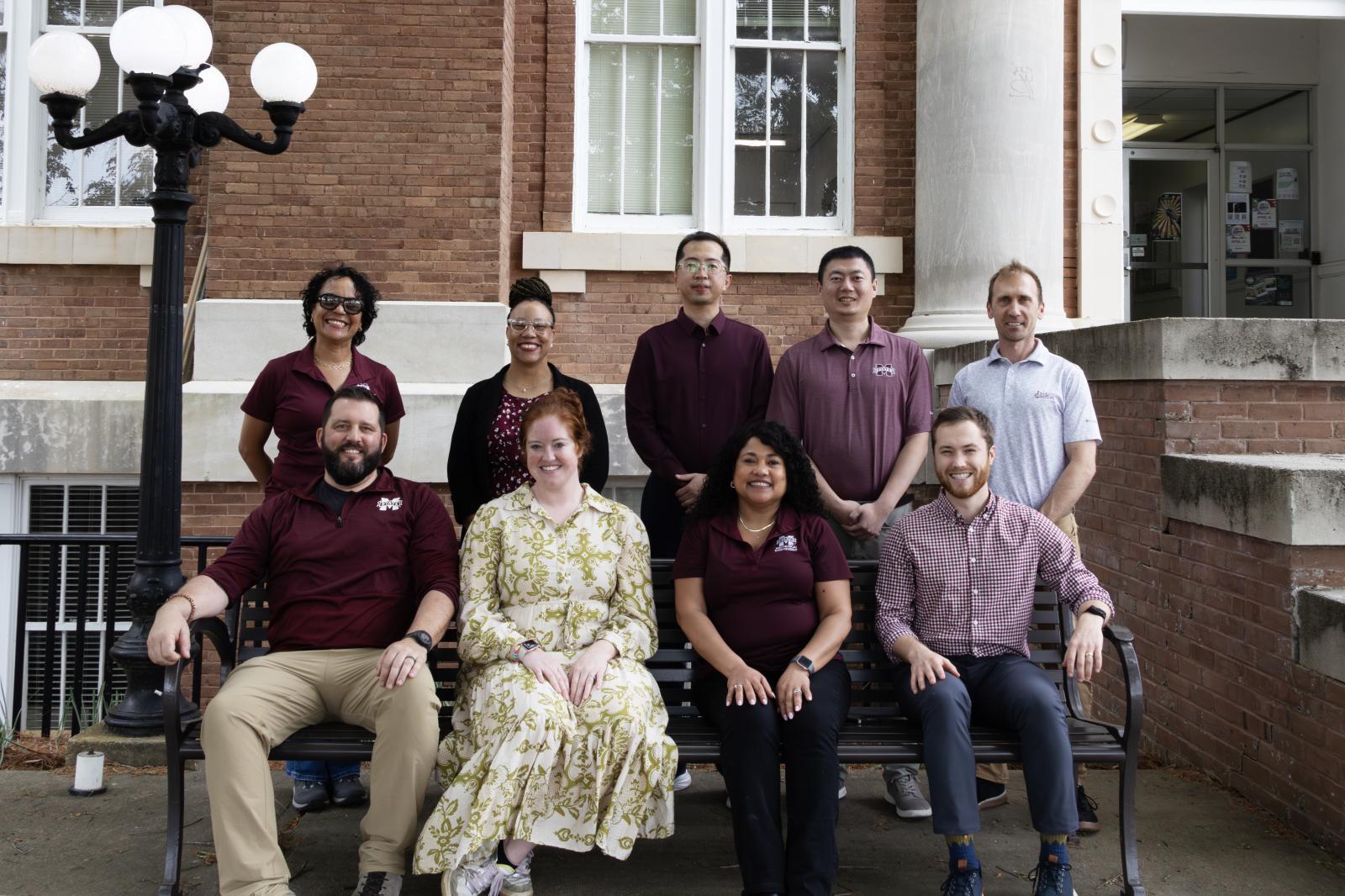
Joining Stone are co-principal investigators Carley Morrison, School of Human Sciences; Jay McCurdy, Department of Plant and Soil Sciences; and Gang Li and Jian Zhao, Hall School of Mechanical Engineering. Other core participants on the project include Mississippi Agricultural and Forestry Experiment Station scientists Leyla Rios de Alvarez, assistant professor, animal and dairy sciences; Jesse Morrison, associate research professor, plant and soil sciences; Xiaofei Li, associate professor, agricultural economics; IDEELab Director Dalton “Ross” Smith, assistant professor of practice, mechanical engineering; and John Davis, program manager, Industrial Training and Assessment Center.
By integrating distributed energy production with agricultural systems, SAGEIN addresses critical national challenges such as energy security, rural economic growth and environmental resilience. The program aims to help communities adopt sustainable energy technologies while improving land-use efficiency and creating new economic opportunities.
The program also will combine distributed energy systems, artificial intelligence and smart agriculture technologies through a new graduate certification program. This initiative will train master’s and doctoral students, preparing them to become research entrepreneurs and technical experts equipped to address the evolving challenges of energy, agriculture and sustainability in rural America.
SAGEIN features a three-phase educational model that blends technical learning, research innovation and professional development. Graduate students will complete a 12-credit certification program that spans four focus areas: rural energy use assessment, smart agriculture integration, AI-driven solutions and entrepreneurial ventures. The curriculum is designed to connect classroom learning with real-world challenges, fostering both technical expertise and the skills to bring innovations to market.
Stone said these efforts aim to produce new frameworks for sustainable rural energy development, data-driven tools for system optimization and practical strategies to accelerate technology transfer and commercialization.
The Bagley College of Engineering is online at www.bagley.msstate.edu and can be found on Facebook, Twitter, Instagram and YouTube at @msuengineering. Learn more about the Mississippi Agricultural and Forestry Experiment Station at www.mafes.msstate.edu.
Mississippi State University is taking care of what matters. Learn more at www.msstate.edu.