
MSU’s Dyer named Northern Gulf Institute director
Contact: James Carskadon
STARKVILLE, Miss.—A long-serving Mississippi State faculty member and atmospheric sciences expert has been named director of the Northern Gulf Institute, a National Oceanic and Atmospheric Administration cooperative institute led by MSU.
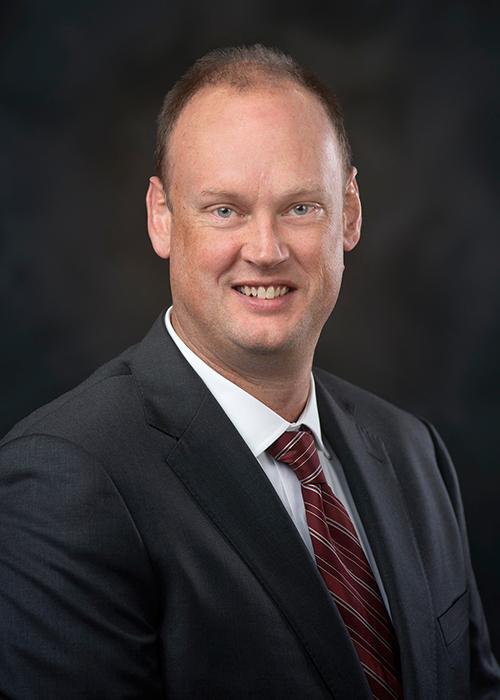
Jamie Dyer, who has served as NGI’s associate director since 2021, will lead the organization in coordination with Co-Director Paul Mickle, who has been with NGI at its Stennis Space Center location since 2020. Dyer will continue serving as dean of MSU’s College of Integrative Studies while leading the institute’s efforts to advance research, education and outreach across the Gulf Coast region.
The NGI is a consortium of six academic institutions across the Gulf Coast states working in partnership with NOAA to address critical issues related to climate, weather, coastal and marine ecosystems, environmental hazards and data management. Together, the partners conduct research and outreach supporting NOAA’s mission and help communities make informed decisions about the region’s environmental challenges and opportunities.
“The Northern Gulf Institute has an outstanding track record of providing critical scientific expertise that advances our understanding of the Gulf’s ecosystems, resources and communities on behalf of NOAA and coastal stakeholders,” said Scott Willard, MSU interim vice president for research and economic development. “Dr. Dyer’s extensive experience as a researcher, educator and administrator, along with his longstanding involvement with NGI, makes him exceptionally well positioned to lead the institute as it continues expanding its impact across the Gulf Coast region.”
Dyer has been a member of the MSU faculty since 2005 and currently serves as professor in the Department of Geosciences. His research focuses on hydrology, climatology, atmospheric processes, environmental systems and applications of uncrewed aerial systems, and he has secured competitive funding from organizations including NOAA, the National Science Foundation and other federal agencies. He has worked closely with the NGI through numerous research initiatives and collaborative projects throughout his career.
In addition to his research appointments and leadership positions, he previously served as MSU’s interim dean of interdisciplinary studies and administrative intern in the Office of the Provost and Executive Vice President. He earned a bachelor’s degree in physics, a master’s degree in geography and a doctorate in geography from the University of Georgia.
“I have worked with the Northern Gulf Institute since it was first established and am excited for the opportunity to give back in a leadership role,” Dyer said. “As the associate director I learned a great deal about the role that NGI plays in the Northern Gulf region, and as director I am excited to continue building on that work and expanding on the impact that NGI has on regional communities.
“MSU has a strong background in research related to environmental topics across the Gulf, and I look forward to fostering and building collaborations that help expand these efforts,” he added.
Led by MSU, the NGI includes the University of Southern Mississippi, Florida State University, Louisiana State University, the University of Alabama in Huntsville and Dauphin Island Sea Laboratory.
As a NOAA Cooperative Institute, the NGI conducts research focused on four core themes: climate variability and ecosystem impacts, coastal hazards, ecosystem management and data management systems that support a data-driven economy. The institute also supports education and outreach programs that connect scientific research with coastal communities, resource managers and decision-makers throughout the Gulf region.
For more information about the Northern Gulf Institute, visit www.northerngulfinstitute.org.
Mississippi State University is taking care of what matters. Learn more at www.msstate.edu.