
More Than a Crop: MSU historian’s new book examines cotton’s place in Southern history
Contact: Sarah Nicholas
STARKVILLE, Miss.—Mississippi State University historian James C. “Jim” Giesen’s latest book explores the cultural, environmental and economic influence of cotton on the American South and its people.
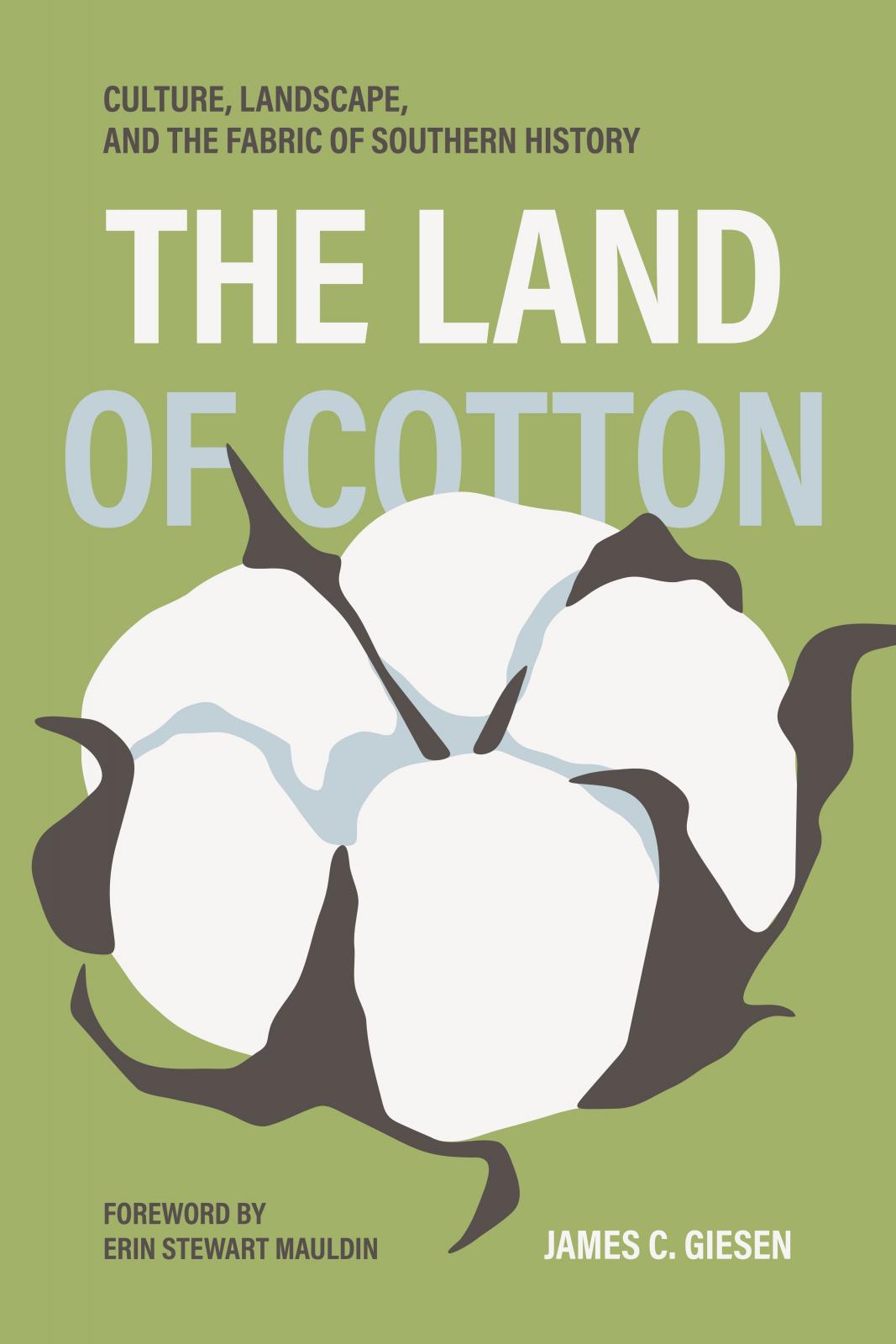
Released this month by University of Georgia Press, “The Land of Cotton: Culture, Landscape, and the Fabric of Southern History,” examines approximately 150 years of history and shows how cotton became more than simply the South’s signature crop.

“What surprised me in the research for this book was the ways that cotton’s presence on Southern farms impacted the way people could talk about history,” said Giesen, an associate professor in MSU’s Department of History. “For instance, even though the plant had created dramatic erosion gullies in parts of South Carolina, locals celebrated cotton and the Confederacy as soon as pine trees covered up that erosion. And in Memphis, African Americans celebrated the plant with a cotton festival every year for decades because it helped demonstrate how important Black labor was to the economies of Mississippi, Tennessee and Arkansas.”
By focusing on two Southern landscapes—the South Carolina Piedmont and the Mississippi Delta—Giesen shows how environmental change and local conditions influenced cotton’s role in the region’s economy, politics, culture and historical memory.
“At the end of the day, I hope that people read my book and think about the ways farm fields, old cotton mills and gins, blues museums and even Cotton, Inc. T-shirts impact how they think about the history of the South and their place in it,” he said.
Giesen is a fellow and the immediate past president of the Agricultural History Society, one of the nation’s oldest discipline-based professional organizations, founded in 1919 to promote the study and research of agricultural history and rural life. He served as the society’s executive secretary for a decade, overseeing its daily affairs and helping shape its policies and direction, while MSU’s Department of History served as its institutional home. In recognition of his contributions as an educator, the society established in 2019 the annual James C. Giesen Teaching Excellence Award in Agricultural and Rural History, which was first presented at the society’s 100th annual meeting in Washington, D.C.
Giesen focuses his research in the environmental and agricultural history of the American South. His book “Boll Weevil Blues: Cotton, Myth, and Power in the American South,” a 2011 University of Chicago Press publication, was awarded the 2012 Deep South Book Prize and the 2013 Francis B. Simkins Award from the Southern Historical Association for the best first book on Southern history.
At MSU, Giesen is a John Grisham Master Teacher who received a 2012 Gulmon Eminent Scholar Award from the College of Arts and Sciences and was named MSU’s Humanities Researcher of the Year by the Mississippi Humanities Council in 2020.
Visit MSU’s College of Arts and Sciences and Department of History online for more information.
Mississippi State University is taking care of what matters.