
Moroccan Ambassador Amrani visits MSU, supporting decade-long education alliance with Université Internationale de Rabat
Contact: Harriet Laird
STARKVILLE, Miss.—Youssef Amrani, Ambassador of Morocco to the U.S., visited Mississippi State University on Friday [Feb. 6] in support of the longtime partnership between MSU and his country’s Université Internationale de Rabat.
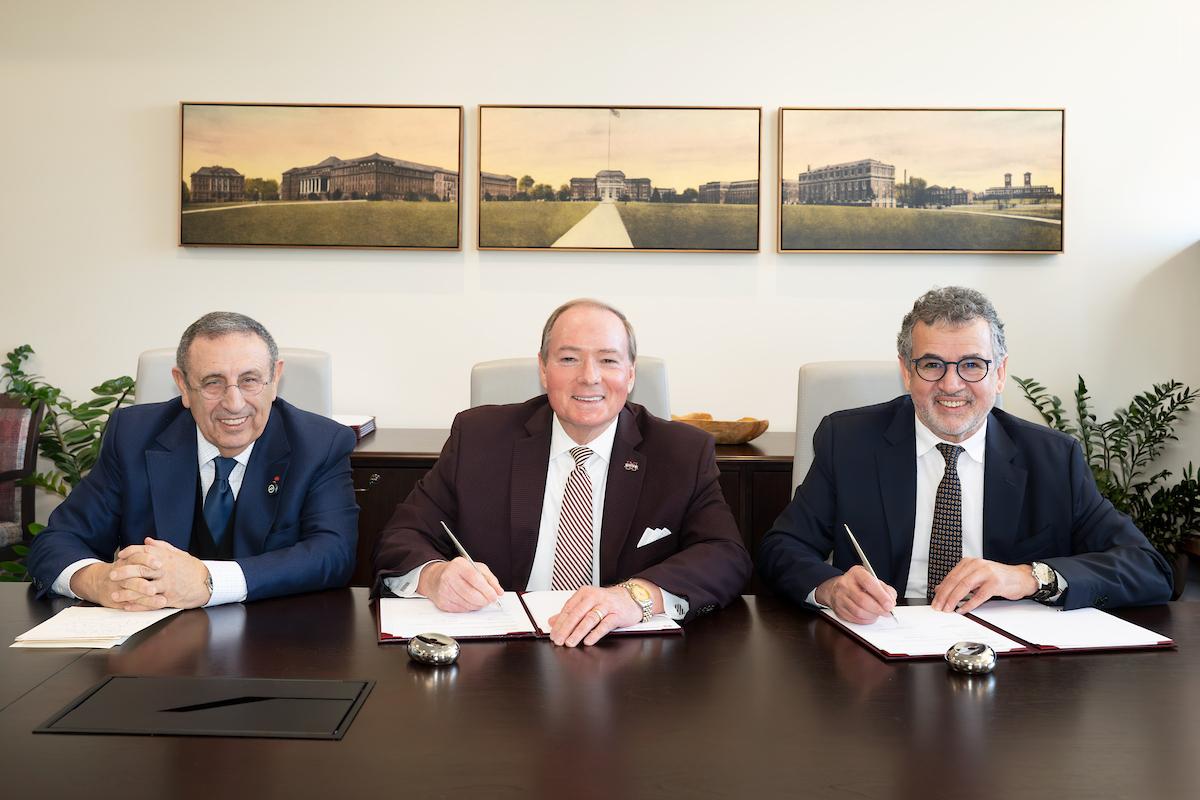
Amrani was present for today’s signing of multiple education agreements between both university presidents, MSU’s Mark E. Keenum and UIR’s Noureddine Mouaddib. Amrani, who has served his country as Ambassador to the U.S. since 2023, also visited with MSU-UIR engineering students and alumni while on campus.
Video by Sarah Kirk
“I think that this visit, this agreement and this contact between two important universities, one in Morocco and one in Mississippi, will surely foster a new dynamic in our bilateral relations,” Amrani said.
He referenced the longstanding relationship between the U.S. and Morocco, which was the first nation 250 years ago to recognize the U.S. after it declared independence. The nations share a focus on education and science, he said, adding, “we can bring people together and build up a common future in this very complex world.”
The overall master agreement renews the framework for MSU and UIR to develop and offer mutually beneficial academic programs, including agriculture, engineering, business and veterinary medicine, among others. Possible expansion of current dual degree programs, student and faculty exchanges, and joint research initiatives are in the scope of the document, which is effective until 2031.
Keenum said MSU enjoys a “rich relationship” with UIR.
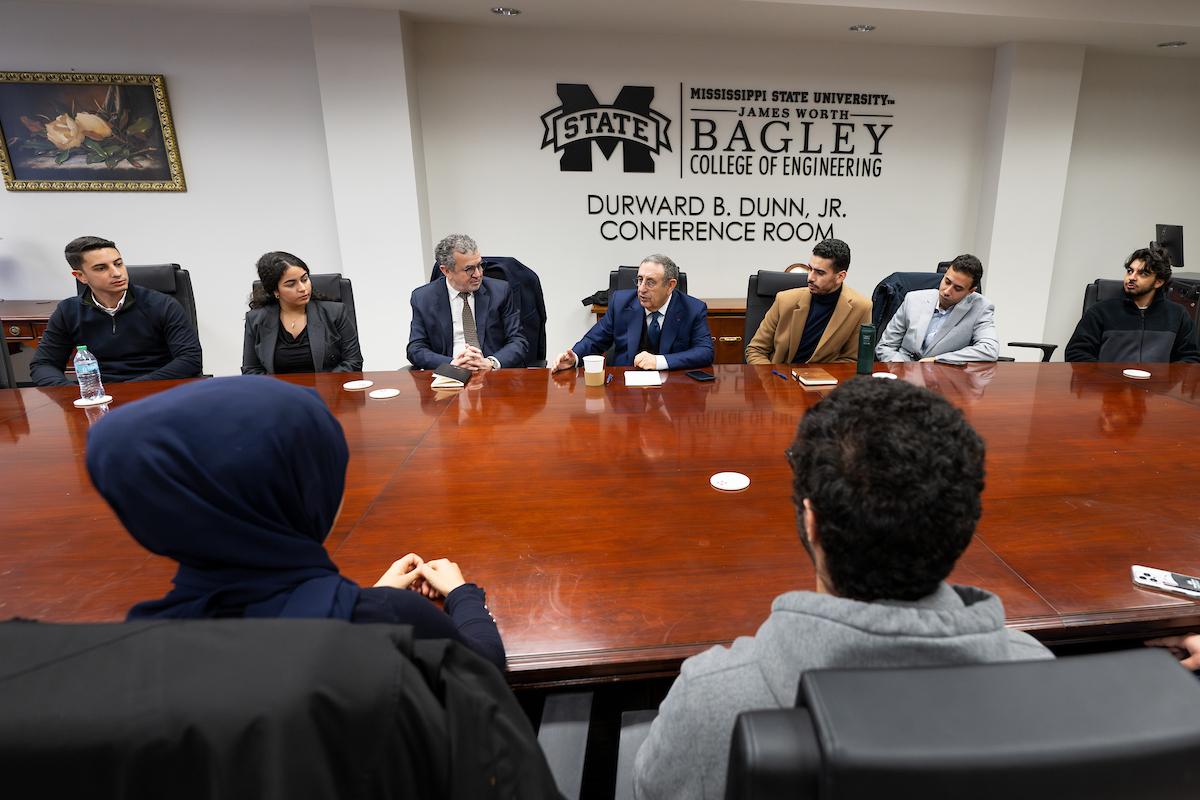
“For well over a decade, we’ve had hundreds of students from this university come to Mississippi State to pursue their graduate studies in engineering. We also are excited about opportunities that we have been able to offer for our students to study abroad at UlR,” Keenum said. “It’s a wonderful partnership, and today we’re expanding beyond engineering to include agriculture, architecture, business and other meaningful programs for their students to come here to study and for our students to have the opportunity to continue studies there.”
Keenum referenced his past visits to Morocco, noting the country’s “outstanding hospitality and beauty.”
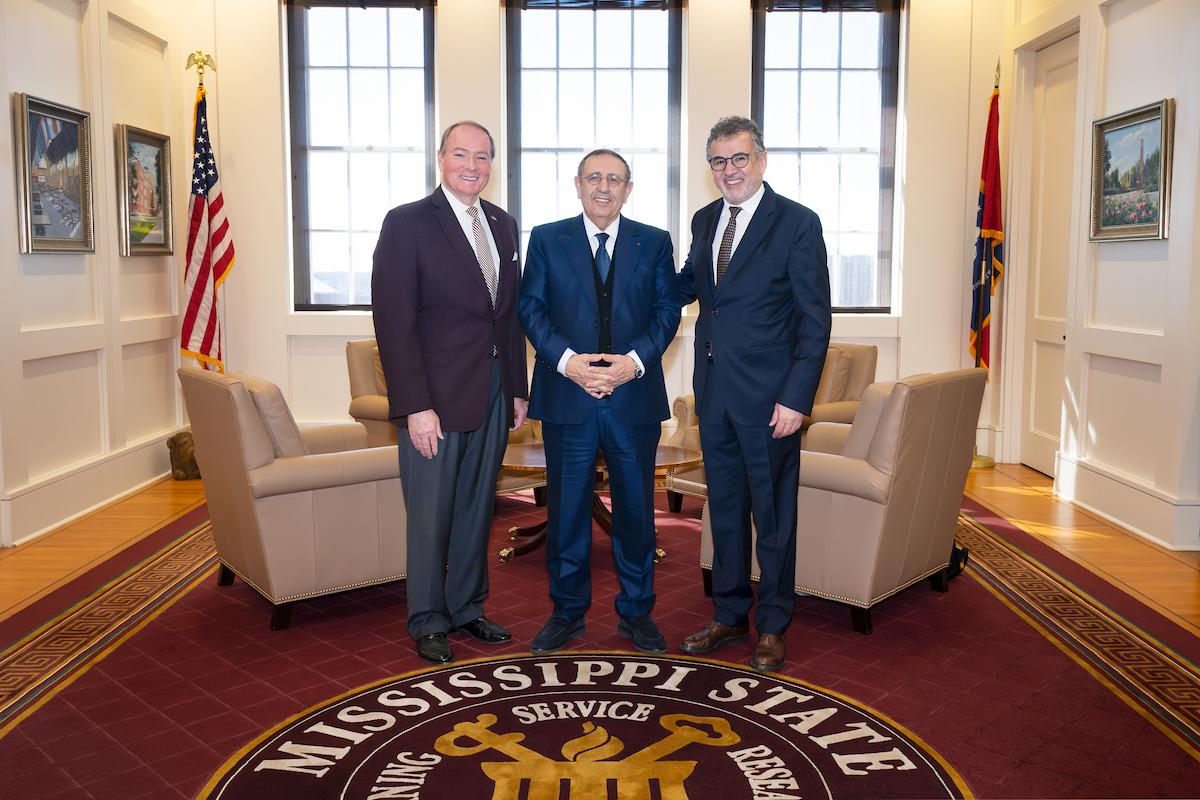
“We feel very proud about this collaboration,” Mouaddib said. “It is a very big opportunity, and I hope to write this new chapter with you,” he said to Keenum and other MSU leaders in attendance. He added that many modern challenges, including artificial intelligence innovation, will benefit from the teaching and research partnership.
In addition, Keenum and Mouaddib signed three execution agreements, signifying the mutual establishment of dual degree programs. The first is between MSU’s Bagley College of Engineering and UIR to co-sponsor doctoral degrees in science, engineering and technology. In the second execution agreement, the College of Agriculture and Life Sciences will offer a master’s degree in plant and soil sciences upon completion of an ag-related bachelor’s degree from UIR.
The final joint agreement creates a four-year bachelor’s in tourism and destination development at MSU through the College of Integrative Studies and a three-year bachelor’s degree program in international tourism and hospitality at UIR. This is a combined pathway for students to earn a degree from each university.
Currently, MSU and UIR offer collaborative bachelor’s and master’s degrees in such areas as engineering, political science, archeology, anthropology and Middle Eastern cultures.
Mississippi State University is taking care of what matters. Learn more at www.msstate.edu.