
MSU’s Raspet flight lab receives UAS donation to advance uncrewed systems research, operations
Contact: Claire Wilson
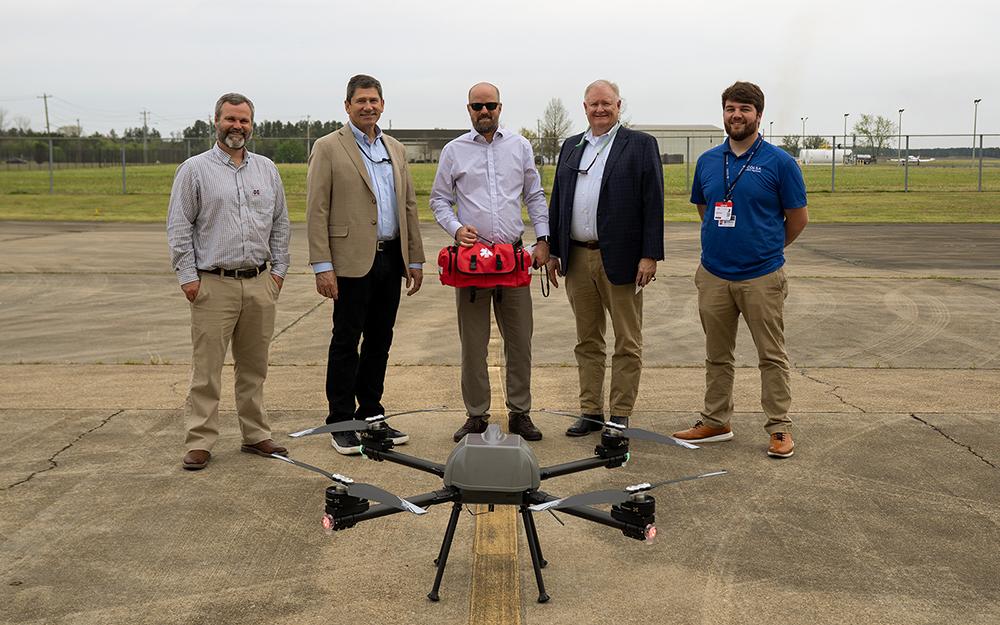
STARKVILLE, Miss.—Mississippi State’s Raspet Flight Research Laboratory has received a TALON uncrewed aircraft system from COLSA Corp., supporting ongoing research in uncrewed systems, flight operations and national UAS policy.
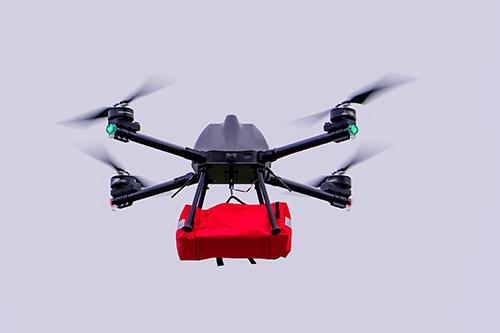
The TALON UAS provides Raspet with an adaptable, remotely piloted aircraft system capable of carrying a range of equipment and of conducting a variety of missions. The aircraft will assist with a variety of applied research projects.
COLSA Corp. is a Huntsville, Alabama-founded entity that has provided engineering, programmatic and information technology solutions to defense and space markets for more than 45 years.
“This donation supports our mission to conduct applied aviation research in service to industry, government and the public,” Raspet Director Bryan Farrell said. “The TALON expands our ability to evaluate uncrewed systems in operationally relevant scenarios while contributing data that informs the responsible advancement of UAS policy.”
From a flight operations perspective, the TALON adds a new class of capability to Raspet’s diverse aircraft fleet.
“The TALON allows us to integrate and evaluate more complex payloads and communications architectures than many small UAS platforms,” said Austin Wingo, Raspet associate director of flight operations. “It is well suited for integration-focused testing and fills an important capability gap within our fleet.”
Raspet will use the TALON UAS in research supporting disaster response and humanitarian assistance, environmental monitoring, infrastructure inspection, and cargo and logistics operations—applications where uncrewed systems can improve access, safety and efficiency.
“We are proud to contribute this TALON utility drone to MSU in support of research, development and new technology,” said James Kennedy, COLSA vice president of UAS. “Investments like this help bridge industry and academia, and I look forward to the breakthroughs and talent that will come from it."
The donation reflects Raspet’s collaboration with COLSA on the development of next-generation uncrewed aircraft technologies. Collaborative efforts include the manufacturing and evaluation of low-cost, small UAS for first responders and warfighters, as well as the integration of command-and-control capabilities that enable remote operations in degraded environments and support varying levels of autonomy.
“This partnership demonstrates a shared commitment to developing uncrewed systems that are practical, resilient and operationally relevant,” Farrell said. “We look forward to continuing our collaboration with COLSA on future research initiatives.”
MSU’s Raspet Flight Research Laboratory is a national leader in UAS research, testing and evaluation. Home to one of the largest and most capable unmanned aircraft fleets in academic use, it conducts applied research on behalf of federal agencies and industry partners, supports the safe integration of UAS into the national airspace and advances technologies benefiting government, commercial and public missions. For more, visit www.raspet.msstate.edu.
Mississippi State University is taking care of what matters. Learn more at www.msstate.edu.