
MSU faculty member’s research helps inform Congressional debate on private equity’s impact on national defense industry
Contact: Carl Smith
STARKVILLE, Miss.—A Mississippi State faculty member’s research is helping inform federal lawmakers as they discuss how private equity impacts one of America’s most important public services: national security.
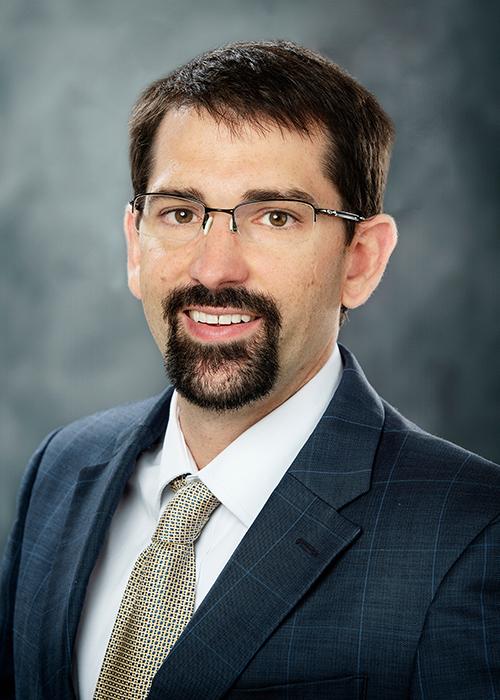
Last month, a 2022 study co-authored by MSU’s Benjamin Tkach was cited by members of the U.S. Banking, Housing and Urban Affairs Senate Subcommittee last month as Congress looks to develop better guidance for future acquisitions of companies working in the public sector.
“Just like with any other new industry, regulation oftentimes trails it,” said Tkach, MSU Department of Political Science and Public Administration associate professor. “Nothing in our research says private equity is bad or shouldn’t be involved, but we, as a country, need to recognize that the game has changed over the last decades and should update how we review these transactions.”
While defense contractors historically were either publicly traded corporations or privately owned companies, private equity firms have emerged as significant industry players in the last 20 years. Since 2000, these firms have acquired more than 1,500 defense contractors. In recent years, they are “responsible for over 40% of annual mergers and acquisitions in the U.S. defense industry,” the research article “Defense Contractors, Private Equity Firms and United States National Security” featuring Tkach and published by the Journal of Global Security Studies states.
Private equity takeovers, Tkach explained, are typically done with groups eying profit by repackaging and selling off parts of the company or the whole business, sometimes within three to five years of purchase. These groups often utilize leveraged buyouts—takeovers that add debt to the company, not the private equity group as a whole. In their work, Tkach and research colleagues Charles Mahoney and Craig Rethmeyer from California State University, Long Beach attempt to address the possible quandaries of these specific business models and how they affect national defense by tracking real-world data from companies after their purchase.
“‘Buying to sell’ is the phrase we use for private equity,” Tkach said. “Just for comparison, your typical venture capital acquisition pools money and buys a stake in a company where they benefit as its revenue grows—they’re buying to build. Those are two different motivators behind how you conduct business, and a business’ motivation is paramount when it comes to such an important public service.
“I believe the spirit of entrepreneurship in the American defense industry is found in venture capital because the goal is to grow your business through development of capabilities that the government needs,” he continued. “Profit is still the motivating factor, but they’re developing something because they want the pie to grow. They’re in it for the long term, because some of these deals can be moonshots of 15 years or more.”
Ongoing research, Tkach said, shows mixed investment—those ventures involving private innovation supplemented by public investment through government contracts—“generate the best outcomes for the American people.”
“That’s why we have companies like Anduril, SpaceX and Palantir,” he continued. “The U.S. government is relying on SpaceX for lift capacity, including taking cargo and astronauts to the international space station. Mixed investment from the government and private sector fueled SpaceX’s development.
The trio’s research makes general recommendations, including more in-depth Pentagon reviews about how future deals—specifically leveraged buyouts—affect companies’ balance sheets.
“I believe in the market and in people pursuing their own self-interest because collectively and eventually, they produce the best societal outcome when regulation properly acts as guardrails,” Tkach said.
Tkach, the co-director of MSU’s Food and Agriculture as Competitive Statecraft Collaboratory, joined the university in 2018 after serving as an assistant professor of security and intelligence at King University in Tennessee and an assistant research scientist at Texas A&M University’s Center on Conflict and Development. He holds a bachelor’s degree from Whitworth University in Washington and a Ph.D. from Texas A&M.
“Seeing our work cited by lawmakers and inform policy reflects why Mississippi State is distinct from other universities across the country. I firmly believe in our land-grant mission—that we are here to serve the people of Mississippi and the people of the U.S.—and that starts with Dr. Keenum’s appreciation of what we do as faculty,” Tkach said. “Our defense industry is significant in purpose and scale. It’s a national issue, and it’s here in Mississippi. We must be cognizant of how capital flows affect the overall industry because that affects all of us as citizens at the end of the day.”
Visit https://academic.oup.com/jogss/article-abstract/7/4/ogac018/6649338 to read the 2022 research discussed by lawmakers. Cambridge University Press also published “Leveraging national security: private equity and bankruptcy in the United States defense industry” featuring Tkach and his CSULB colleagues in 2024. That article is available online at https://www.cambridge.org/core/journals/business-and-politics/article/leveraging-national-security-private-equity-and-bankruptcy-in-the-united-states-defense-industry/A6DC30F360EF19EF1BECB9BF2D5EB9A7.
Mississippi State University is taking care of what matters. Learn more at www.msstate.edu.