
Newest MSU Institute for the Humanities Fellows explore language, literature, philosophy
Contact: Sarah Nicholas
STARKVILLE, Miss.—Three Bulldog instructors are the latest Mississippi State Institute for the Humanities Faculty Fellows, and their scholarship explores communication across languages, ancient literature’s influence on sources and quotations, and the contributions of Greek and Roman women philosophers.
Awarded annually for research support, the fellowship includes a $1,000 stipend and one course release in the spring semester, giving scholars focused time to advance major research and writing projects.
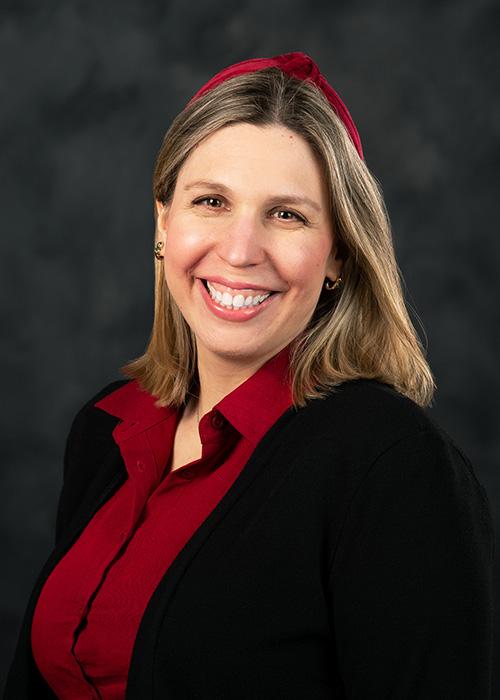
This year’s Institute for the Humanities Fellows include:

—Lourdes Cardozo-Gaibisso, associate professor of teaching English to speakers of other languages and linguistics in the Department of English, is completing the edited volume “Designing Contextualized Multilingual Learning Experiences: Place, Practice, and Pedagogy,” under contract with Emerald Publishing with an expected 2017 release. Her fellowship work examines how multilingual families’ environmental knowledge can be dismissed until it is translated, a phenomenon known as the translation tax. The research has implications for today’s increasingly multilingual classrooms, where recognizing students’ community knowledge can help educators create more effective and inclusive learning environments.

—Scott DiGiulio, associate professor of classics in the Department of Classical and Modern Languages and Literatures, is developing his second book, “Verba aliena: Quotation as Discursive Practice in Roman Literature.” His fellowship work will examine how the Roman philosopher Seneca the Younger used quotations to engage with and reshape earlier literary traditions. By exploring how writers use the words of others to establish credibility and shape conversations, DiGiulio’s research offers perspective on a practice that remains central to how people communicate ideas today.
—Mary Hamil, assistant professor of classics in the Department of Classical and Modern Languages and Literatures, is working on the edited volume “Ancient Women Philosophers of Greece and Rome,” under advance contract with Routledge. Her fellowship work will focus on women philosophers associated with Epicurus’ philosophical community in ancient Athens and contribute to the first comprehensive scholarly edition devoted to ancient Greek and Roman women philosophers. By examining evidence about women whose philosophical contributions have often been overlooked or distorted, Hamil’s work expands scholars’ understanding of who participated in the intellectual life of the ancient world.
The fellows will collaborate throughout the spring semester by sharing drafts, participating in group discussions and contributing to the institute’s mission of fostering vibrant humanities scholarship at MSU.
“Over the past six years, this fellowship has yielded real results for our recipients, who have produced a wide range of scholarly and creative works,” said Joseph Thompson, interim institute director and associate professor of history. “Those publications help our fellows advance professionally while also highlighting the role MSU faculty members play in generating pathbreaking scholarship across the humanities. I’m excited to see the individual projects, as well as the community, that our 2027 fellows develop next semester.”
Part of MSU’s College of Arts and Sciences, the Institute for the Humanities promotes research, scholarship and creative performances in the humanistic disciplines while raising their visibility within MSU and the wider community.
Visit MSU’s College of Arts and Sciences and the Institute for the Humanities websites for more information.
Mississippi State University is taking care of what matters.